Print and Audiobook Royalties: The Halo Beyond Ebooks
Paperback anchors the ebook's value; audiobook can raise total royalties over 50%. POD and ACX royalty math, and the traps to avoid.
The Self-Publishing Review · Sourced & Numerate
Price on the royalty math — the 70% band, KENP page reads, and KU vs wide.
Price is governed by hard royalty math and measured elasticity, not by instinct — and the wrong price quietly halves your earnings. This section covers the load-bearing rule of indie pricing: the $2.99–$9.99 band where Amazon KDP pays 70%, and the 35% cliff on either side of it. It also covers Kindle Unlimited page-read (KENP) economics, the KDP Select versus wide-distribution decision, series pricing ladders, and the promotional mechanics — Kindle Countdown Deals, permafree funnels — that move units without torching your royalty. Every figure here is dated and sourced, because Amazon changes its royalty rates, KENP payout, and rules silently and often.
Price & Royalties
A regime decision made on genre and goals, not loyalty. KU exclusivity versus Apple, Kobo, Google and Nook — the honest tradeoffs.
Paperback anchors the ebook's value; audiobook can raise total royalties over 50%. POD and ACX royalty math, and the traps to avoid.
A discounted Book 1 is a loss-leader funnel; profit accrues in Books 2–N. The read-through math that makes free worth it — and when it doesn't.
KU pays from a floating monthly fund divided by pages read — not by the sale. The KENP rate, the $66.9M Global Fund, and the 3,000-page cap.
A $0.99 Countdown Deal keeps 70% — nearly double a raw price cut. The mechanics, the backloaded stack, and the mistakes that kill ROI.
Amazon KDP pays a 70% royalty only inside the $2.99–$9.99 band; step outside it and the rate falls to 35%, quietly halving your earnings. Here is the exact math that governs your income — with the delivery fee, the $9.99 cliff, and Kindle Unlimited page reads folded in.
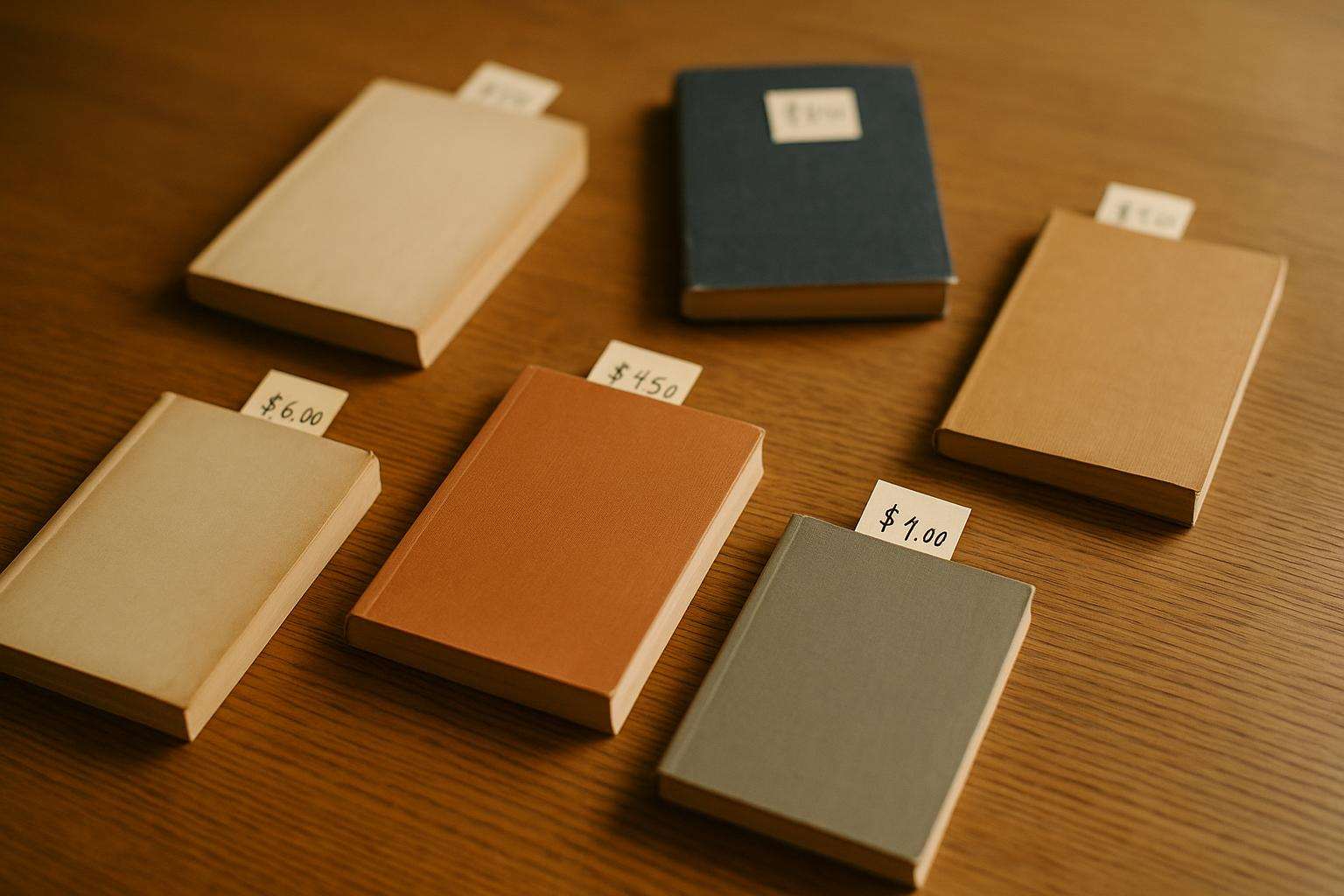
$0.99 maximizes units, $4.99 maximizes fiction revenue, $7.99–$9.99 signals nonfiction expertise. Price for the goal you actually have.
Amazon KDP pays a 70% royalty only when an ebook is listed between $2.99 and $9.99 in the US; priced below $2.99 or above $9.99, the royalty drops to 35%. The gap is dramatic: a $9.99 ebook earns about $6.89 at 70%, while a $10.99 ebook earns only about $3.85 at 35% — a $3.04-per-sale cliff for one dollar of list price. A $0.99 book earns roughly $0.35 at 35%, so you would need to sell about six times as many copies to match the revenue of a single $2.99 sale. Staying inside the band is the first rule of pricing.
Kindle Unlimited pays authors from a monthly KDP Select Global Fund, divided by total pages read across all enrolled titles, so the per-page rate (KENP) floats month to month. It has hovered around $0.0040 to $0.0050 per page in recent years — roughly $0.00445 on average in 2025 and about $0.004888 in May 2026 — which makes a fully read 300-page novel worth close to $1.35. The Global Fund reached $66.9 million in May 2026, up 27-fold from its $2.5 million launch in 2014, but per-page rates have compressed because total pages read grew faster. Plan conservatively at a $0.004 floor and never model $0.005.
It is a regime decision made on genre and goals, not loyalty. KDP Select requires digital exclusivity in exchange for KU page-read income and promo tools like Countdown Deals; wide distribution puts you on Apple Books, Kobo, Google Play, and Nook, where several retailers pay 70% at all price points with no $9.99 cap. A practical test: count the KU badges in the top 100 of your primary sub-category — roughly 70 or more favors Select, 30 or fewer makes wide viable. Romance, LitRPG, and cozy mystery skew heavily to KU; most nonfiction, children's, and international-focused titles do better wide.