Package to Convert
Title and Subtitle Formulas That Earn the Click
The title is a brand-and-curiosity hook; the subtitle is the searchable, benefit-carrying workhorse. Proven patterns by genre — and the data behind the ones that sell.
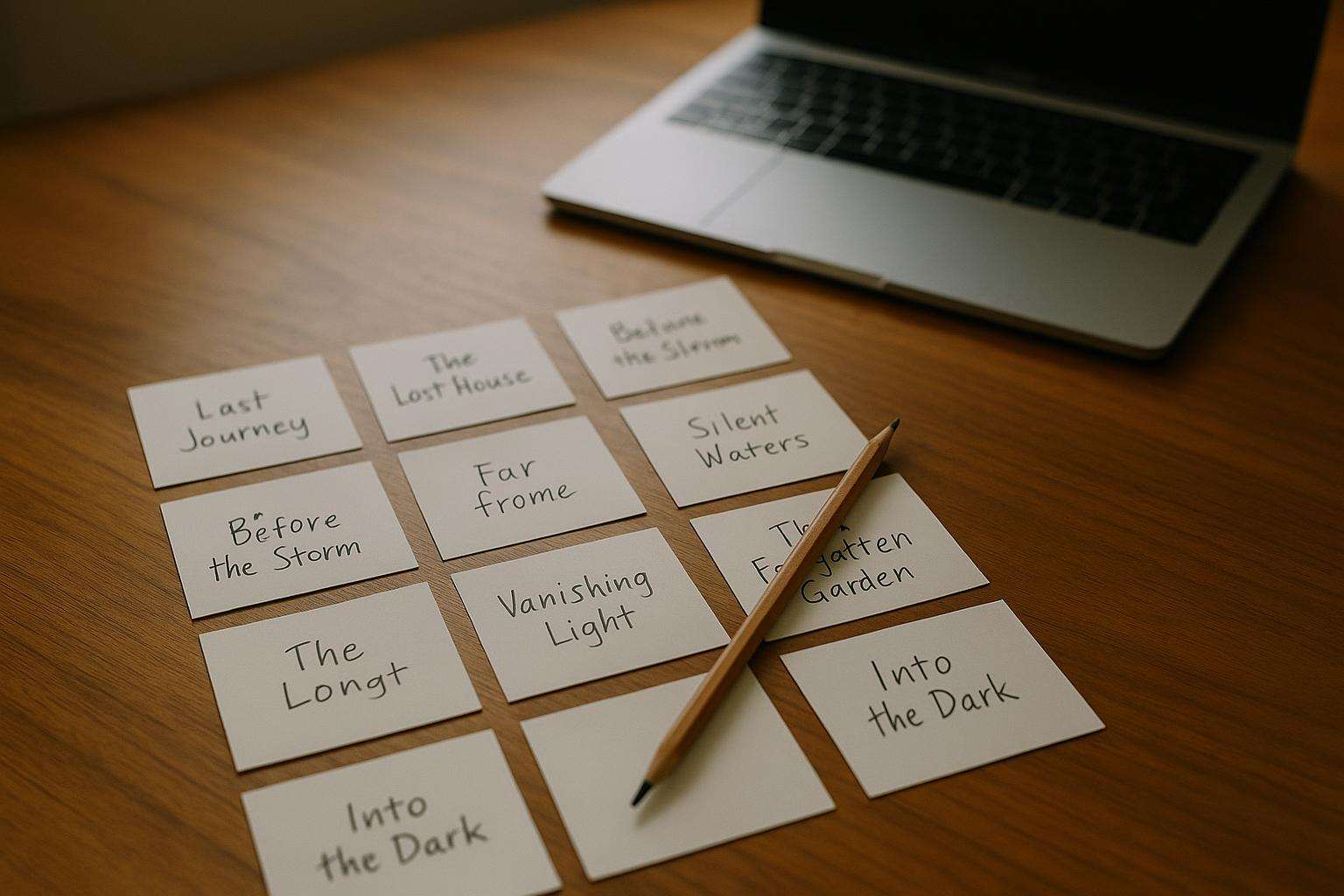
The title is not the name of your book. It is the first and often the only sentence of selling a browsing buyer will read before deciding to click — or keep scrolling. Get it wrong and no amount of craft, cover design, or backend keyword strategy recovers the sale. Get it right, and your title earns impressions from readers who have never heard your name, on searches you chose months before publication, at exactly zero additional cost.
That dual job — human hook and search-engine signal — is what separates a working title from a pretty one. The main title is a brand promise; the subtitle is a searchable workhorse. Neither phrase can do the other’s job, and confusing the two assignments is the single most common titling mistake in indie publishing. Vanessa R. Thomas’s Demand by Design frames it plainly: the main title earns the click from someone already looking at you; the subtitle earns the impression from a stranger who has never heard your name.
What Is the Title Actually Doing on Amazon’s Search Algorithm?
Amazon’s search algorithm indexes the words in your title and subtitle fields far more heavily than the words in your seven backend keyword boxes — roughly three times the weight, according to Kindlepreneur’s metadata analysis. That asymmetry makes the title and subtitle your primary search-ranking asset, not a decorative label. Every character you spend there does more work than any character in the fields below it.
The click-through consequences of ranking are concrete. A keyword ranking at Amazon position one earns a click-through rate of approximately 27%. By position four, that rate has fallen to 8%. By position six, it sits around 6% — meaning the same book, on the same search, earns roughly one-quarter the traffic just by ranking five spots lower. Title and subtitle word choice directly determines which searches you compete for and at which position you land.
The discoverability gap created by a subtitle alone is large enough to be a strategic decision on its own: nonfiction books with a descriptive, keyword-bearing subtitle are found approximately 40% more often in search than the same book with no subtitle. The optimal combined display length sits at 60–80 characters, where the entire title-plus-subtitle reads at a glance without being cut on a phone screen. The most-cited example in self-publishing is Atomic Habits plus its full subtitle: 51 combined characters, no wasted syllable.
How Do Fiction and Nonfiction Titles Split the Work Differently?
The formulas diverge sharply at the genre line, and copying the wrong playbook costs you readers before they ever reach the cover.
For nonfiction, the subtitle is where the revenue lives. A working subtitle names three things in a single phrase: who the book is for, what problem it solves, and what changes after the reader finishes it. Atomic Habits: An Easy & Proven Way to Build Good Habits & Break Bad Ones is the industry reference case. James Clear did not guess that title. He built a spreadsheet of 150 nonfiction books each selling over one million copies, extracted structural patterns, and filtered every candidate through five gates: does it cover the book’s essence, does it spark curiosity, does it contain contrast, is it ownable (no existing SEO competition), and can the author live with it permanently? The phrase “Good Habits” failed the ownability filter. “Atomic Habits” passed all five. The book has spent more than 260 consecutive weeks on the NYT Best Seller list as of November 2024, with 25 million copies sold across 65 languages.
Clear also deploys a dual subtitle: the Amazon listing reads An Easy & Proven Way to Build Good Habits & Break Bad Ones (keyword-loaded, purchase-intent optimized) while the cover and web-facing tagline reads Tiny Changes, Remarkable Results (an emotionally resonant contrast promise). Two subtitles, two conversion contexts, the same reader — a split-context strategy that serves search and emotional resonance simultaneously.
For fiction, genre is signaled through the sound and structure of words — never through an explicit genre label. A romance reader does not need the word “romance” in the title; she finds books through categories and covers, and a genre word reads as amateur. The romantasy formula “A [Grand Place] of [Noun] and [Noun]” works because it encodes stakes, magic, and intensity in its very grammar. Sarah J. Maas held that exact structure across all five books in the A Court of Thorns and Roses series, which has reportedly sold more than 13 million copies as of 2026. The repeatable lesson is formula consistency across a backlist, not the sales scale.
When a fiction title cannot carry the genre signal on its own, the solution is a plain fiction genre subtitle: “A Cozy Mystery,” “A YA Fantasy Romance,” “A Psychological Thriller.” These do the indexing job the main title was not designed to carry.
What Are the Proven Title Patterns by Genre?
The shapes that sell are already mapped. The patterns below represent the structural conventions behind the majority of million-copy sellers in each genre — borrow one deliberately rather than inventing from scratch.
| Pattern | Genre | Structure | Example |
|---|---|---|---|
| Brand hook + benefit subtitle | Nonfiction | 1–3 concept words + 5–12 word subtitle naming audience, method, outcome | Atomic Habits: An Easy & Proven Way to Build Good Habits & Break Bad Ones |
| The number formula | Nonfiction | [Specific number] + [deliverable] + [result] | The 4-Hour Work Week; The 7 Habits of Highly Effective People |
| Verb like an expert | Nonfiction | [Action verb] + “Like a” + [aspirational authority] | Think Like a Monk; Steal Like an Artist |
| The counterintuitive why | Nonfiction | “Why [counterintuitive claim]” — subtitle resolves the tension | Why We Sleep; Why Nations Fail |
| Unexpected adjective + common noun | Nonfiction | Surprising modifier on a familiar subject noun | Quiet; Mindless Eating |
| Romantasy noun-of-noun-and-noun | Fiction (romantasy) | A/The [grand place] of [noun] and [noun] | A Court of Thorns and Roses; House of Salt and Sorrows |
| The Girl/Woman domestic thriller | Fiction (thriller) | The [Girl/Woman] [preposition] [location or situation] | Gone Girl; The Girl on the Train |
| The trope signal | Fiction (romance) | Phrase encoding the central romantic dynamic for genre readers | The Hating Game (enemies-to-lovers) |
| Single evocative word | Fiction (all genres) | One unique, pronounceable, genre-resonant noun | Dune; Educated; Twilight |
The historical evidence that the words inside a title drive sales predates every algorithm. Publisher Henry Haldeman is reported to have retitled the novel Gautier’s Fleece of Gold to The Quest for a Blonde Mistress, after which annual sales rose from roughly 6,000 copies to approximately 50,000 — a lift of around 733% on the same book, documented in Kindlepreneur’s comprehensive book-titling guide. The story changed nothing. The promise on the spine changed everything.
What Hard Rules Does Amazon Enforce on Every Title and Subtitle?
Before you commit to any title, learn the constraints Amazon enforces mechanically — a violation earns a rejected listing, not a polite correction notice.
- 200-character ceiling. Your title and subtitle combined cannot exceed 200 characters. Amazon KDP’s official guidelines insert a colon between title and subtitle automatically on the listing page. Exceed the ceiling and the listing is rejected at the technical review stage.
- Cover must match metadata exactly. The title entered in KDP must match the title printed on your cover character-for-character. A single discrepancy triggers rejection in review. This is the most common reason first-time listings get bounced.
- Mobile truncation at 70–80 characters. Most Amazon browsing happens on phones. The first 70 to 80 characters are all a mobile shopper sees before the title truncates with an ellipsis. Front-load the primary keyword and the core benefit in that window.
- Optimal combined display length: 60–80 characters. The entire title-plus-subtitle should read at a glance without truncation. Atomic Habits plus its subtitle runs just 51 characters and is cited across the industry as a near-perfect example of economy.
- No prohibited terms. Amazon bans bestseller or rank claims, competitor author names, URLs, pricing or discount language, and — as of the January 2025 policy update — most special characters (exclamation points, question marks, dollar signs) except within established brand names. Violating listings are flagged, suppressed, or rejected without a warning.
- Never repeat title or subtitle words in your backend keyword boxes. Words in the title and subtitle are already indexed at higher weight. Repeating them in keyword fields wastes a coverage slot you could aim at a different search query.
The keyword non-repetition rule is the highest-leverage zero-cost move on your entire listing. List your title, subtitle, and all seven backend keyword phrases side by side. Highlight every significant word that appears in more than one field. Each highlight is a wasted slot. Rewrite the keyword boxes until no important word appears twice — your title and subtitle are already covering those searches at a higher index weight. A single pass through this exercise routinely doubles the number of distinct searches your book can answer without adding one visible word to your listing.
How Should You Test a Title Before You Commit?
Your instinct about your own title is your least reliable data point. You know what your book is about; your buyer does not. The fix is to test cheaply against real purchase behavior before you lock any title in.
When Tim Ferriss was naming the book that became The 4-Hour Work Week, he ran six finalist titles as Google Ads headlines against content-adjacent search terms his ideal readers were already typing — “401k,” “world travel,” “retirement,” “language learning” — for one week, at a total cost of under $200. The title that won by click-through rate was not his personal favorite. The market voted, the data overruled his taste, and the book went on to sell more than 2.1 million copies, spend approximately four years on the New York Times Best Seller list, and be translated into 40 languages. The same Google Ads methodology was later replicated by the team behind The Phoenix Project: a three-day campaign across 45 keywords confirmed their title and subtitle before the book went to print.
A faster alternative is PickFu, a polling service that puts your title candidates in front of real genre readers — filtered by age, reading frequency, and genre preference — and returns both vote counts and written explanations in 15 to 30 minutes, starting at $20 per poll with a minimum of 15 respondents. One author used PickFu to validate a title and description before launch and subsequently achieved Amazon bestseller status in five categories. Read the written explanations, not only the vote tallies: a sentence about why one title pulled a reader often names the exact word your final version is missing.
When framing the test question, ask for purchase intent rather than aesthetic preference: Which of these titles would make you most likely to click and look at this book on Amazon? Liking is cheap; clicking is the behavior you are actually buying. And before you lock any winner, search it on Amazon and on Google — sharing a title with a better-known book routes your buyers to someone else’s page and earns you one-star reviews from readers who received a book they never intended to buy.
Frequently asked
How does Amazon weight the title and subtitle fields versus backend keyword boxes?
Amazon’s search algorithm treats the words in your title and subtitle fields as your highest-priority metadata — indexing them at roughly three times the weight of the seven backend keyword boxes you fill in during publishing. This weighting asymmetry means those two visible fields matter more to search ranking than any keyword strategy you apply in the fields beneath them. Words that appear in your title and subtitle are already indexed, so repeating them in keyword boxes buys you nothing; every repeated word is a wasted slot that could target a different search query instead. The practical implication: treat your title and subtitle as your primary search investment, write them with the precision you would give advertising copy, and use all seven backend keyword boxes exclusively for search phrases those two fields do not already contain.
What is the KDP character limit for a book title and subtitle combined?
Amazon KDP enforces a hard 200-character ceiling on the combined length of your title and subtitle. KDP automatically inserts a colon between the two fields when displaying the full listing title. Exceed the 200-character limit and your listing is rejected at the technical review stage. In practice, the more important constraint is mobile: most Amazon browsing happens on phones, and a phone displays only the first 70 to 80 characters before truncating with an ellipsis. Optimal combined display length sits between 60 and 80 characters, where the entire title-plus-subtitle reads at a glance without being cut. The most commonly cited example in self-publishing is Atomic Habits plus its subtitle, which together run just 51 characters — a near-perfect example of economy in character use.
What is the proven formula for a nonfiction subtitle?
A working nonfiction subtitle names three things in a single phrase: who the book is for, what problem it solves, and what changes after the reader finishes it. The optimal word count for a nonfiction subtitle is 5 to 12 words — long enough to carry specific keywords and a concrete benefit, short enough to be processed at a glance and fit cleanly on a cover. Nonfiction books with a descriptive, keyword-bearing subtitle are found approximately 40% more often in Amazon search than the same book with no subtitle. The Brand Hook plus Benefit Subtitle pattern — a short main title built around one high-concept word, followed by a keyword-rich subtitle naming the audience, method, and outcome — is the default formula for first-time nonfiction authors because it cleanly separates the brand function from the search function. Never load the subtitle with vague aspiration language that makes no specific, verifiable promise.
How do fiction titles signal genre without using genre labels?
Fiction titles encode genre through the sound, shape, and vocabulary of the words themselves — never through explicit labels such as “romance” or “thriller,” which read as amateur to readers who navigate by category and cover. Each genre has structural conventions readers decode instantly: the romantasy “A Court of Thorns and Roses” construction signals epic stakes and magic in its grammar; the “The Girl on the Train” cadence signals domestic psychological suspense; a single evocative word like Dune or Twilight signals iconic genre fiction. The trope signal pattern is common in romance: a phrase like “The Hating Game” encodes enemies-to-lovers directly for readers already scanning for that dynamic. When a fiction title genuinely cannot carry the genre signal on its own, the solution is a plain genre subtitle — “A Cozy Mystery,” “A YA Fantasy Romance” — that does the indexing job without cluttering the main title.
How did Tim Ferriss pick his book title and can indie authors replicate the method?
Tim Ferriss tested six finalist titles for what became The 4-Hour Work Week by running each as the headline of a Google Ads campaign against content-adjacent search terms his ideal readers were already typing — keywords like “401k,” “world travel,” “retirement,” and “language learning.” He measured click-through rate only, not conversions, for one week at a total cost of under $200. The title that won by click-through rate was not his personal preference. He followed the data, and the book sold more than 2.1 million copies. Any indie author can replicate this: create one Google Ads campaign per title candidate, target three to five search terms your ideal reader already uses, run all campaigns for five to seven days on a modest budget, and let click-through rate determine the winner. For faster results, PickFu delivers title poll results from real genre readers in 15 to 30 minutes starting at $20 per poll, including written explanations from respondents about why they chose each option.
What words and phrases are prohibited in Amazon KDP titles and subtitles?
Amazon’s content guidelines prohibit a specific set of claims and characters in title and subtitle fields. Prohibited content includes bestseller or rank references — you cannot call your own book a bestseller or cite a ranking position; competitor author names — you cannot use another author’s name to capture their search traffic; URLs and email addresses; pricing or discount language of any kind; and, as of the January 2025 policy update, most special characters including exclamation points, question marks, and dollar signs, except when they appear within an established brand name. Genre descriptions used in the title field itself are also restricted; genre should be communicated through Amazon’s category selection system instead. Violations do not receive a warning — they produce a rejected or suppressed listing. Because Amazon’s guidelines change without public announcement, always verify the current prohibited-term list in KDP’s official help documentation on the day you publish, not from a third-party forum post that may cite an outdated version.
What is the keyword non-repetition rule and why does it matter for search ranking?
Amazon indexes the words in your title and subtitle at a higher weight than the words in your seven backend keyword boxes. Because those fields are already indexed at the higher weight, repeating a title or subtitle word in a keyword box produces no additional search benefit — the coverage is already there. Every keyword box that echoes a title or subtitle word is a slot you could have used to capture a distinct search query instead. The discipline is straightforward: list your title, subtitle, and all seven backend keyword phrases side by side; highlight every word that appears in more than one field; rewrite until no significant word appears twice. This pass routinely doubles the number of distinct searches your book can answer at zero additional cost. The same logic applies inside the title-subtitle pair itself: do not repeat a word from the main title in the subtitle, because that character space could target a second search phrase your main title does not already cover.